Journal · Ideas
Morning Whiteboard Ideas for Your Homeschool
By Cat ·
I have been homeschooling for 15 years, but I'm still learning new strategies all the time! I stumbled on a concept recently called morning whiteboards that I am super excited to share with you, even before I have fully implemented this into my household.
When I was teaching unit study curriculums at Greenbriar Community School, the school children would arrive to a writing prompt written on a portable whiteboard. It was a great way to get the mind focused on academics and starting to wake up for the day.
I don't know why I didn't implement the same concept inside my homeschool, but I think we will now!!!!! My youngest absolutely loves waking up to an educational activity set out for her on her desk, and she's actively learning to both read and write. I think the morning whiteboard would go very well in our household.
The morning whiteboard is more than a writing prompt, although the idea seems to have been inspired by something just as simple. It is a strategy implemented by homeschool parents where their kids wake up to information about the day, writing prompts, Bible verses, whatever the parent feels is worth learning that day written on a whiteboard. It changes every single day.
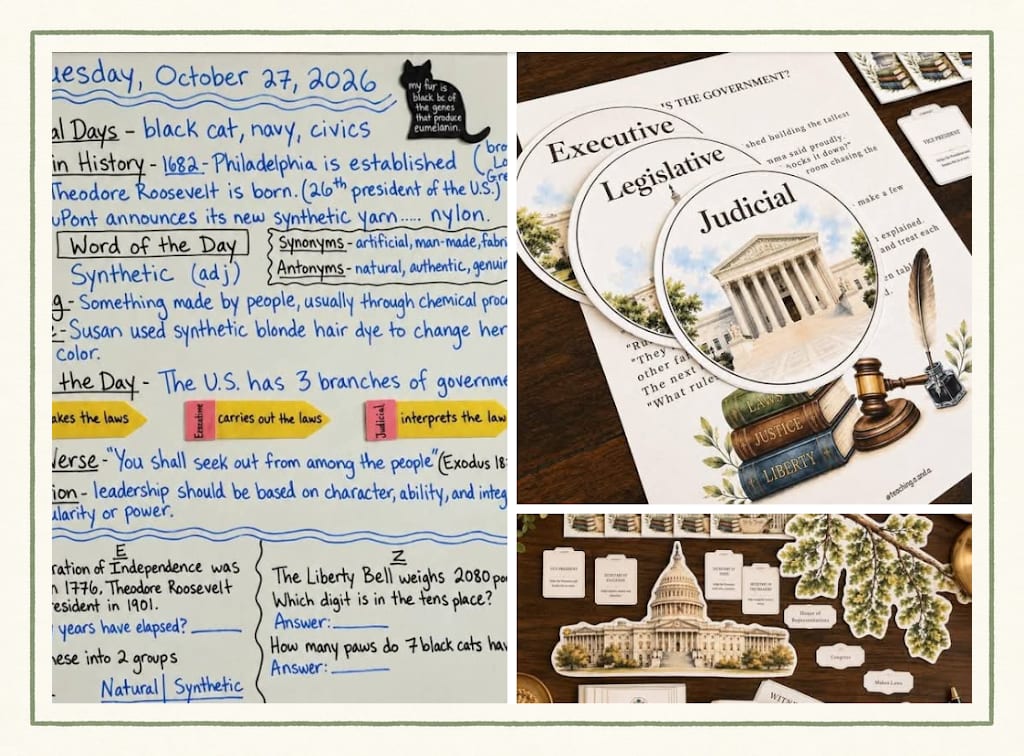
Recently this idea picked up steam in a Facebook group I'm a part of and a spin-off group was created all about these morning whiteboards. Moms are posting photos of their whiteboards almost every day. Sharing tips, and supporting one another.
I asked Linda, the group’s founder, to share how the routine works in her home. Her story starts with something simple and grows from there. Alongside her ideas, I have included three original Homeschool Texas sample boards to help families picture different ways to try it.
What is a morning whiteboard
A morning whiteboard is a place to leave a few short prompts for the day. You might include the date, a math puzzle, a new word or a question about something outside. Children can write, draw, point, build an answer with objects or talk it through with you.
How Linda’s morning whiteboard began
Linda has been homeschooling for seven years and using a morning whiteboard for about three. She started with one simple element: “today is”. The rest developed as her children’s needs changed.
Her oldest child was reading by 26 months, she recalls, and wanted instructions and step-by-step activities. The board gave her a place to bring those into their day.
“And it grew as our needs grew,” she says.
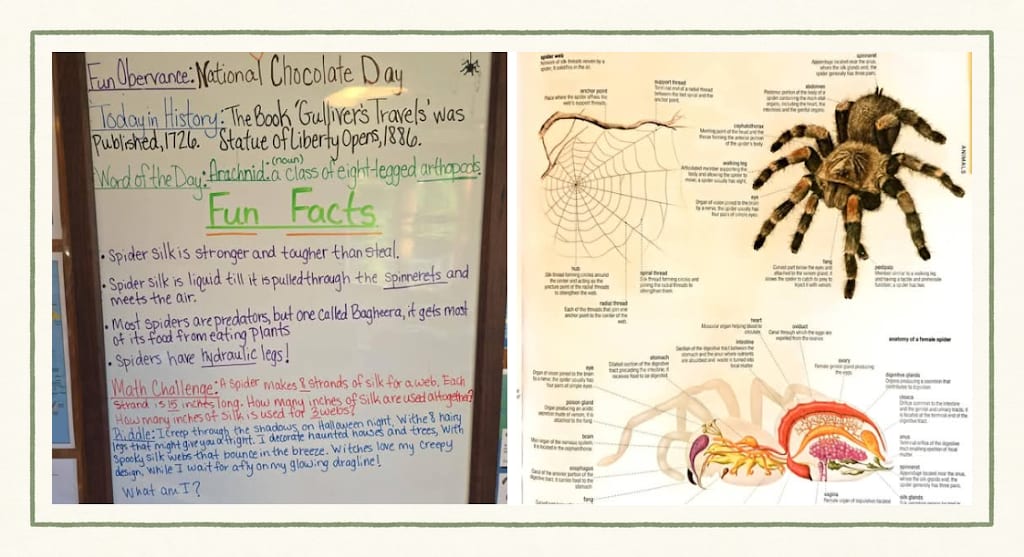
Pairing the board with copywork
Linda pairs her board with a worksheet that includes the word of the day, its meaning, space for a sentence and space for a drawing. While she talks through the board, her children work on their copywork. They can copy her example sentence or write one of their own.
Planning ahead, then following their interests
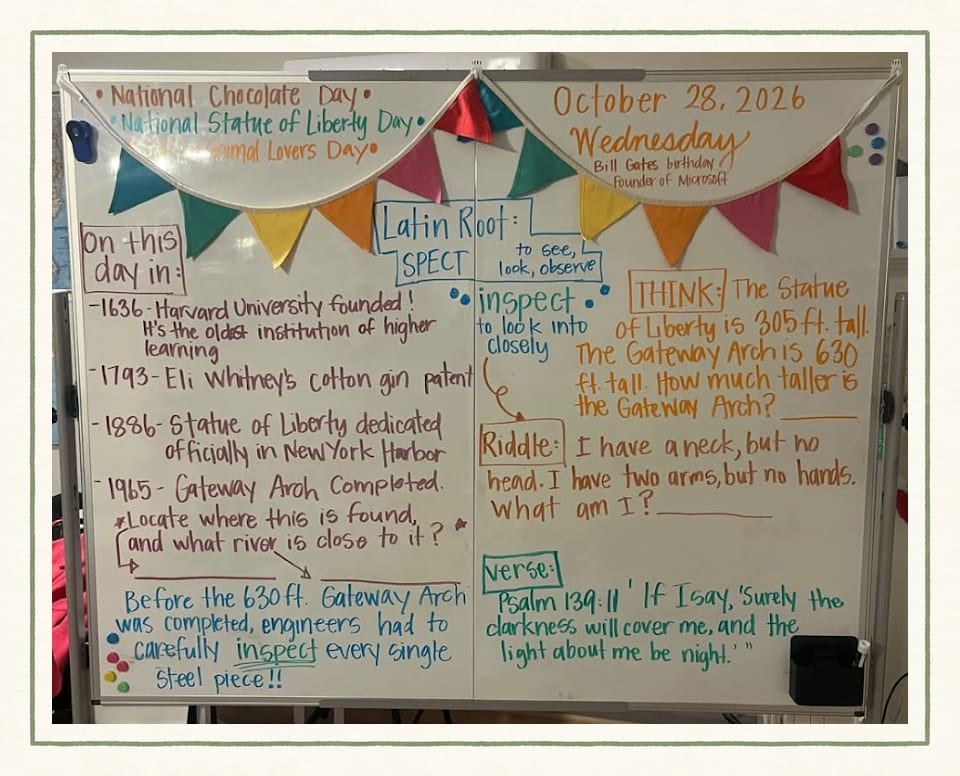
Once a month, Linda researches the following month’s national days and three to five historical events for each day. On the day itself, she chooses one event that fits her children’s interests or something she wants them to learn about. She then tries to connect the word of the day, fact of the day and Bible verse.
She says almost every board sparks an unexpected conversation. National days give them something fun to discuss, and a historical event rarely stays at just one line once the questions begin.
Start with one thing
Linda’s advice is to start slowly and choose what works for your family. For a younger child, that might mean a letter of the day, a color of the day or a simple letter-to-word matching activity.
“Whiteboards can be scaled to any child,” she says.
You do not need to include every element another family uses. Linda also suggests thinking beyond a freestanding board if space is limited: a wall finished with whiteboard or chalkboard paint, or a window, can become the place for the day’s prompts.
As another way to begin, try one familiar prompt, a small challenge or a question your child can answer in their own way. A sheet of paper, a notebook or a chalkboard works too. Add more when your family is ready.
Choose a time that suits your household, perhaps over breakfast or before heading out. If one question leads to a longer conversation, follow it. You can keep a favorite prompt on the board for several days.
An example for early learners
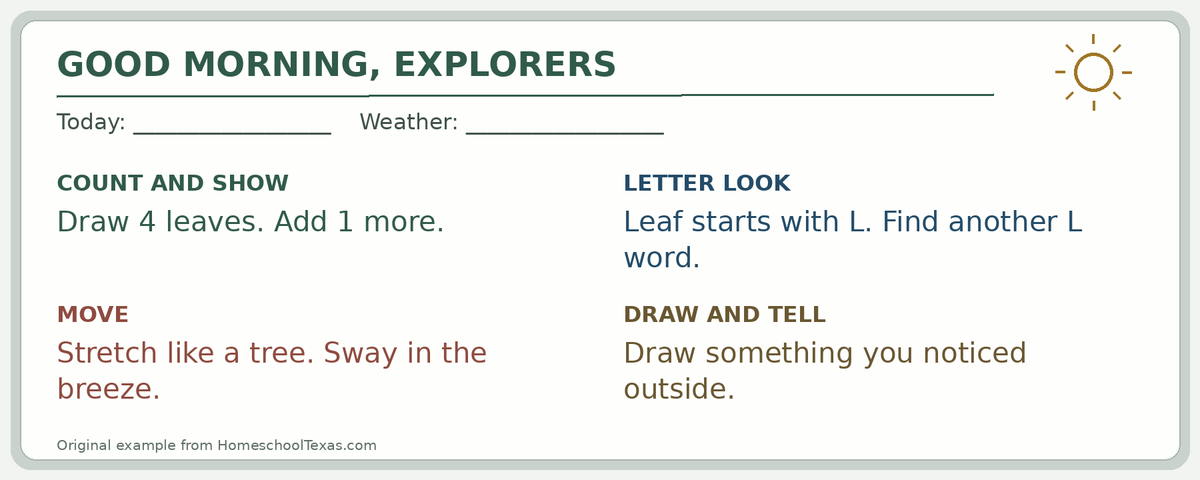
Use pictures, real objects and short directions that you can read aloud. A child could count actual leaves, say a word beginning with L and draw something from the yard. In this sample, four leaves plus one more makes five.
An example for elementary learners
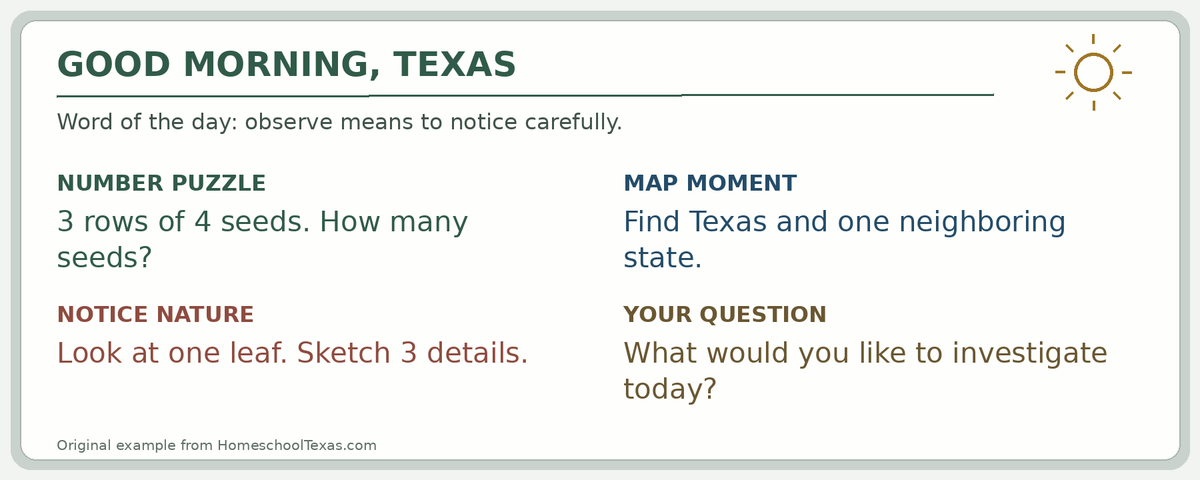
A small math problem can sit alongside a word and a map question. Keep the amount of writing comfortable for your child. They could arrange twelve seeds into three rows of four, then explain their thinking aloud.
An example for a family with mixed ages
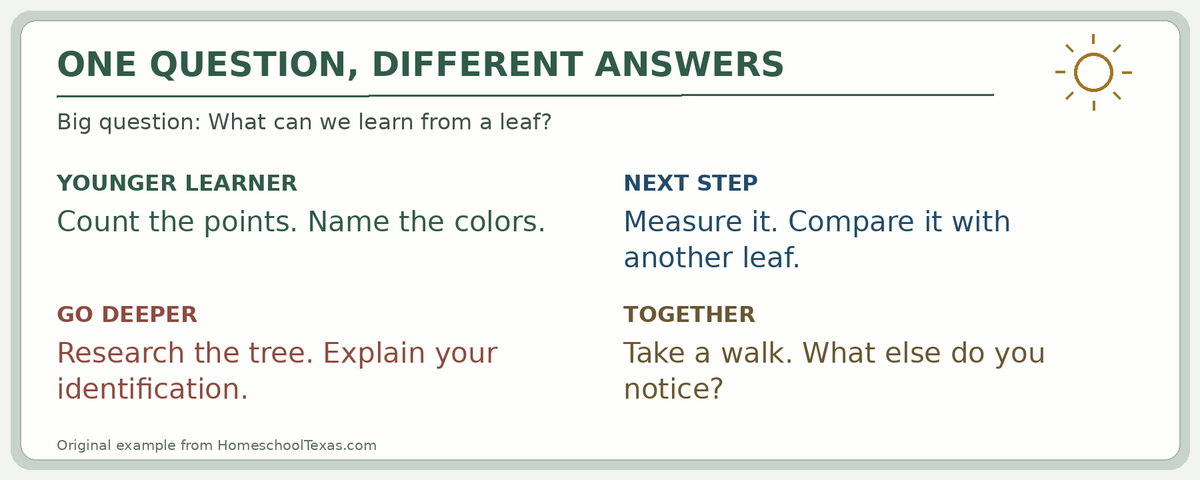
Start with one object or question, then offer different ways to investigate it. For a leaf study, one child might describe colors while another measures, compares or researches the tree. Choose the level by readiness and interest. Siblings can share what they notice.
Let children help make the board
Invite your children to contribute a joke, a drawing, a puzzle or a question for tomorrow. Older students could choose a historical event, check a source or write a problem for a sibling. Giving everyone a turn can keep the board connected to what your family is curious about.
Add a little history
One idea shared in the Morning Whiteboards group was to use HISTORY's This Day in History (opens in a new tab) as a source of short history prompts. HISTORY also offers an email signup for This Day in History (opens in a new tab).
Choose one event that fits your children, read the article yourself and put a short question on the board. The site covers a broad range of topics, so preview the selection before sharing it with younger children.
A younger child could find the place on a map. Another child could add the event to a timeline. An older student could compare two accounts and note which details each source emphasizes. The same event can lead to several different conversations.
Connect the board to your next outing
Before a field trip, ask everyone to name one thing they hope to see or one question they want answered. Afterward, use the board to collect drawings, favorite discoveries and questions that are still open.
You can browse the Homeschool Texas events calendar for an outing to build around. A library visit, a neighborhood walk or time in the garden can give you material for the next board too.
Keep a small collection of ideas
Save questions as they come up during the week. A book, a recipe, a strange bug or a word someone heard can all become a prompt. If your family enjoys themes, try a map question one day, a number puzzle the next and an observation from nature later in the week.
Keep the routine flexible. Read prompts aloud when needed, use large lettering and let children answer without copying everything down. Start with one board and see which parts your family wants to repeat.
Choose a board for your space
Start with whatever works in your space. If you would like a dedicated morning board, here are four ways to set one up.
As an Amazon Associate I earn from qualifying purchases.
Small portable whiteboard
I use a small portable whiteboard for teaching and homeschool activities. It is easy to move from a table to wherever we are learning.
View the portable board from my shopping list on Amazon (opens in a new tab)
A bigger board on wheels
At Greenbriar Community School, we use a larger whiteboard on wheels. A rolling board is useful when you want to move the lesson around. Here is a similar option to consider.
View the VIZ-PRO rolling whiteboard on Amazon (opens in a new tab)
A whiteboard that hangs on the wall
A wall-mounted board gives your morning prompts a regular place without a floor stand. This 36 by 24 inch VIZ-PRO board is one option.
View the wall-mounted whiteboard on Amazon (opens in a new tab)
A clear glass board for the wall
I have noticed people in the Morning Whiteboards group enjoying clear, wall-mounted glass marker boards. This 48 by 36 inch Audio-Visual Direct board is an option in that style, with a transparent, non-magnetic glass writing surface.
View the clear glass marker board on Amazon (opens in a new tab)
Find more morning whiteboard inspiration
Linda began sharing her boards in another group, where parents asked her to create a dedicated space for the idea. She started Morning Whiteboards in response. What she enjoys now is seeing families make the boards their own, whether they use her prompts word for word or take them in a different direction.
Her aim is “to inspire and to be inspired.”
Join the Morning Whiteboards Facebook group (opens in a new tab) for more examples and ideas from other families.
About Cat
I am Cat, a homeschool mom of three. I have been homeschooling since 2011, and I created HomeschoolTexas.com because it was what I needed for my own family. I am sharing the places, resources and learning ideas I find along the way.